ADVERTORIAL

The Mermaid Lamp That Brought Her Favorite Beach Memories Home
For twenty-two summers, my wife collected shells on the same Florida beach. Last Christmas, for the first time, a piece of that beach sat on our mantel.

October 30, 2026 | Columbus, OH
My wife, Linda, decorates for Christmas the same way every year, and she does it beautifully.
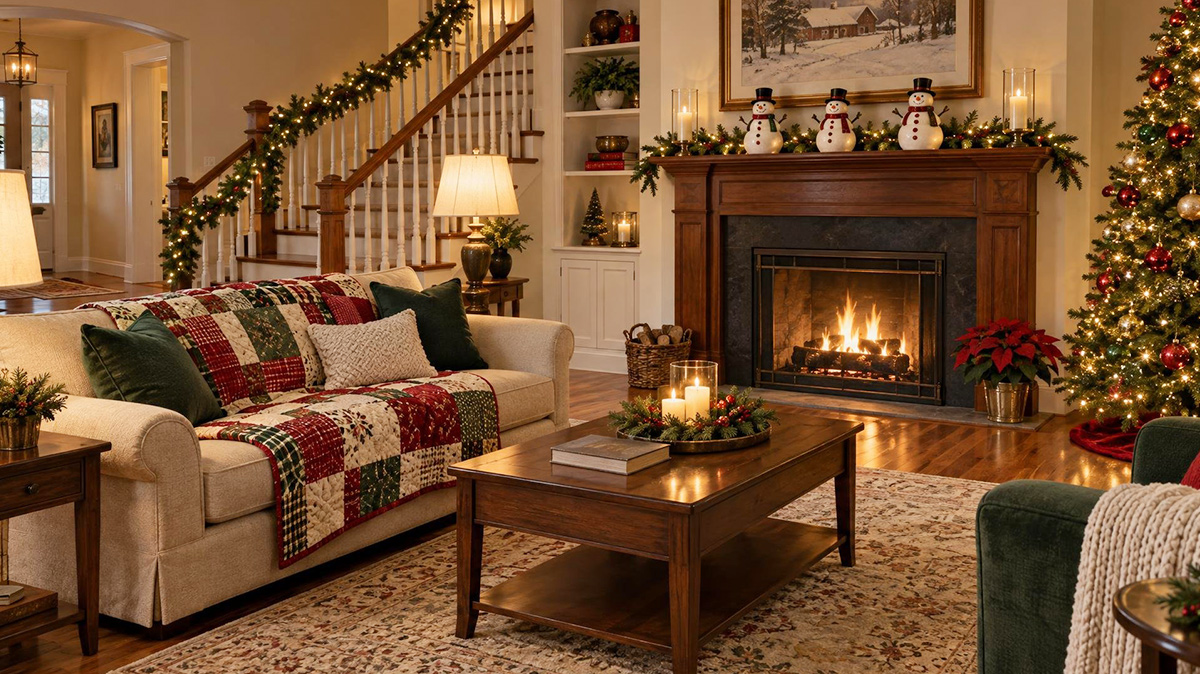
The garland goes up the banister on the Saturday after Thanksgiving. The ceramic snowmen go on the mantel, three of them, smallest on the left. The red-and-green quilt comes out of the cedar chest for the back of the couch. By Sunday night the house smells like the pine candle she buys every November, and it looks like Christmas.
But a few years ago, standing in the living room with a cup of coffee after she'd finished, she said something I've never forgotten.
"It's pretty. It just looks like everybody's house."
The Jar Behind the Toothbrush Holder
Here's what I knew, and what she didn't say.
From 1996 to 2018, we spent the last week of every June on Sanibel Island, on the Gulf coast of Florida. Same rental cottage. Same stretch of beach. Every morning Linda walked the tide line at sunrise, bent over, looking for shells. She came back with her pockets full and sand on her knees.
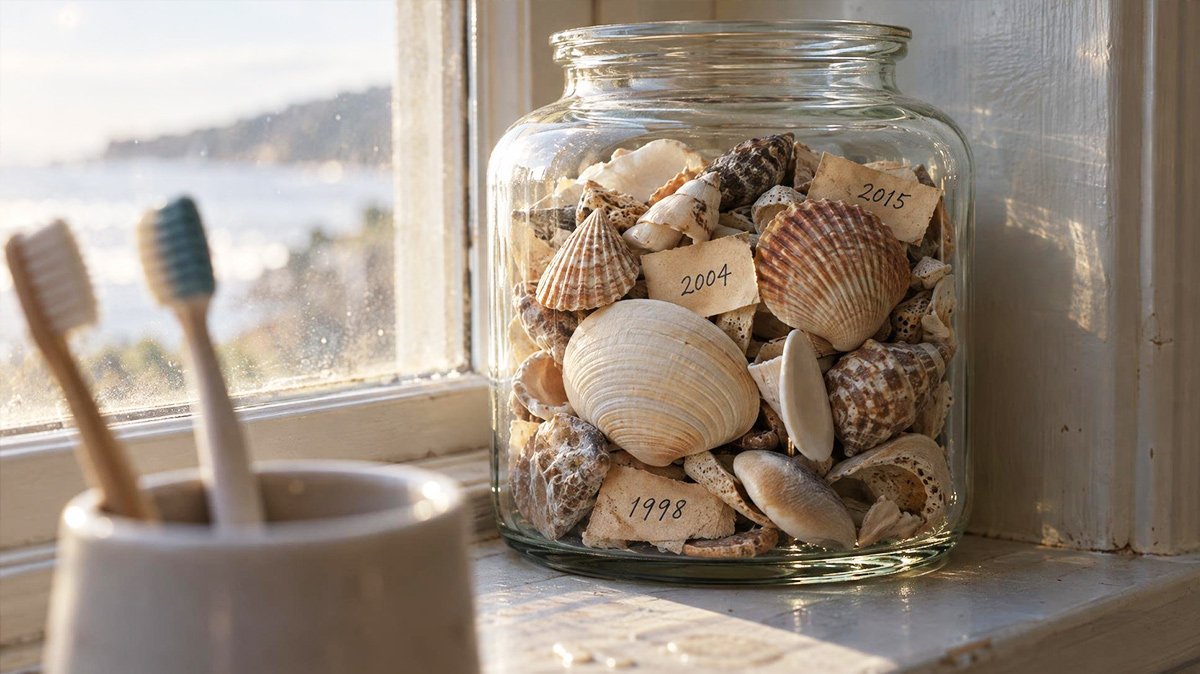
She kept the best of them. Twenty-two summers of shells fill a big glass jar, with a little paper slip in it for each year. Lightning whelks, cockles, a couple of perfect sand dollars and one small nautilus-shaped shell she found in 2009, which she still talks about.
And that jar sits on the bathroom windowsill, behind the toothbrush holder, where nobody sees it.
We haven't been back to Sanibel since her knee surgery. The beach lives in a photo album on her phone now, and in that jar. Every Christmas, our house fills up with decorations, and none of them have anything to do with the place she loves most.
What I Was Trying to Find
The year before last, I gave Linda a bathrobe for Christmas. The year before that, a sweater. She thanked me for both, and she meant it. But I wanted, for once, to give her something that said I'd been paying attention for thirty years.
So I went looking for something "beach" that could stand next to her Christmas things without looking out of place.
It was harder than it sounds. Most coastal decor is a painted wooden sign that says "Life's a Beach," or a string of plastic shells. It tells you somebody likes the ocean. It doesn't feel like the ocean.
Our daughter, Amy, who has her mother's shell habit, solved it. In early December, she texted me a photo with one line: "Dad. This is Mom."
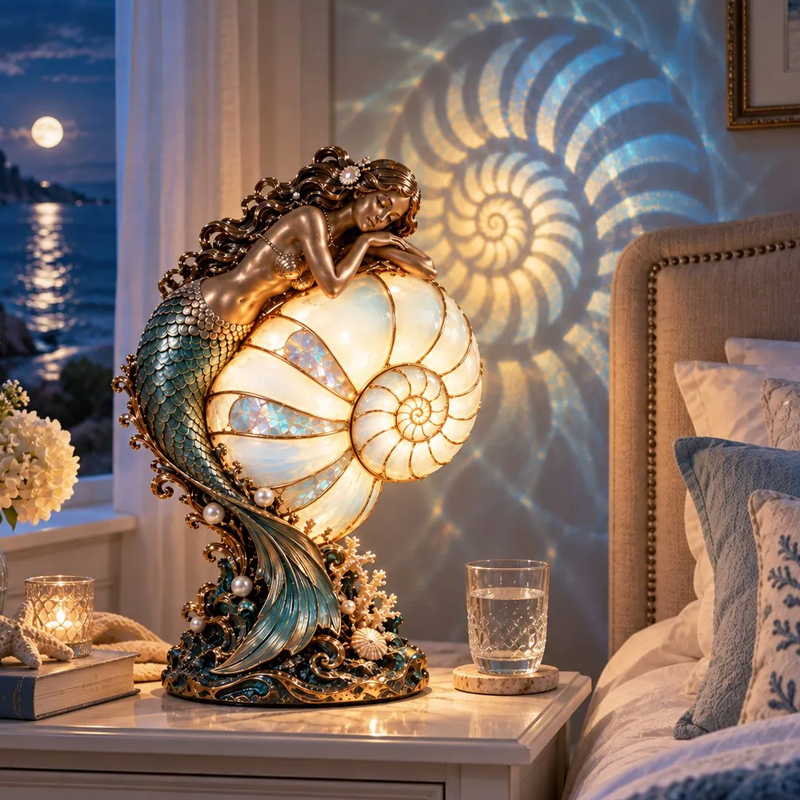
It was a lamp. A bronze-colored mermaid lying across the top of a big nautilus shell, and the shell was made of stained glass, glowing from the inside.
It was called the Graddi™ Sanibel Glow Mermaid Lamp. I ordered it that night.
Christmas Morning
When it arrived, I understood why Amy had texted.
The mermaid has a bronze finish, with painted details you only notice up close: tiny pearls woven through her hair, scales that catch the light down her tail, and a base sculpted like breaking waves, with starfish tucked into it. She lies along the top of the shell with one arm resting over its curve, the way you'd lean on a rock at low tide.
The shell itself is made of segments of stained glass, opalescent, like the inside of a real shell. Even switched off, it looked like something you'd find washed up on a very lucky morning.
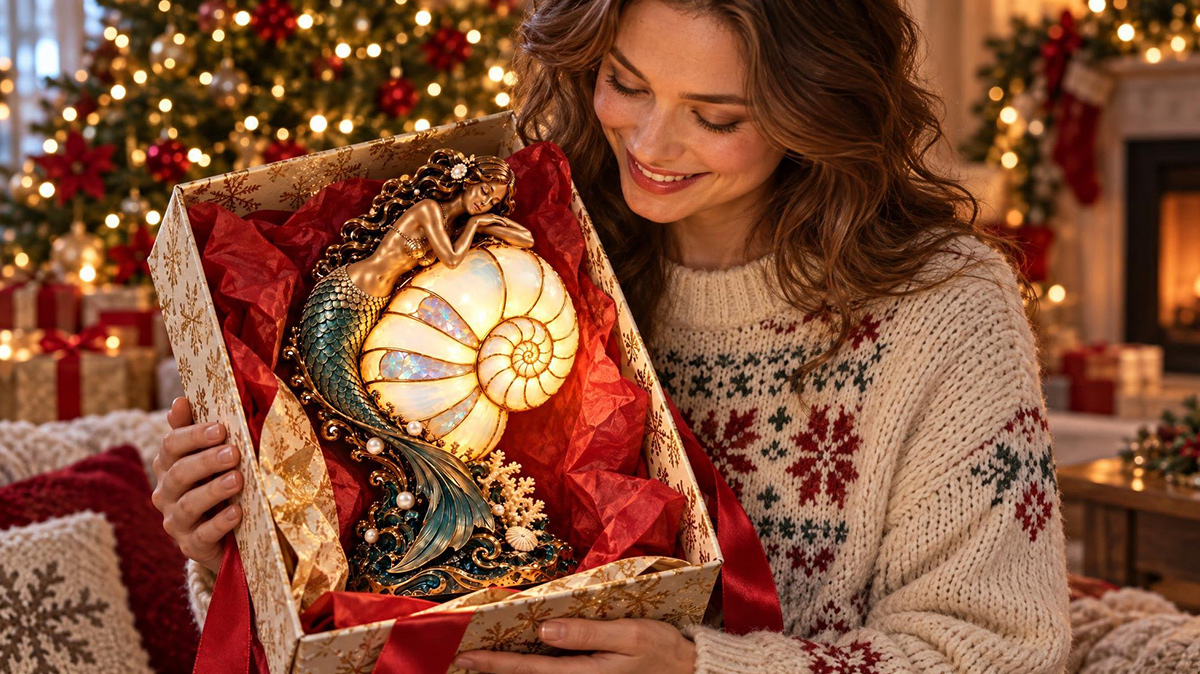
On Christmas morning, Linda unwrapped it and didn't say anything for a while. She ran her thumb over the pearls in the mermaid's hair.
Then she said one word. "Sanibel."
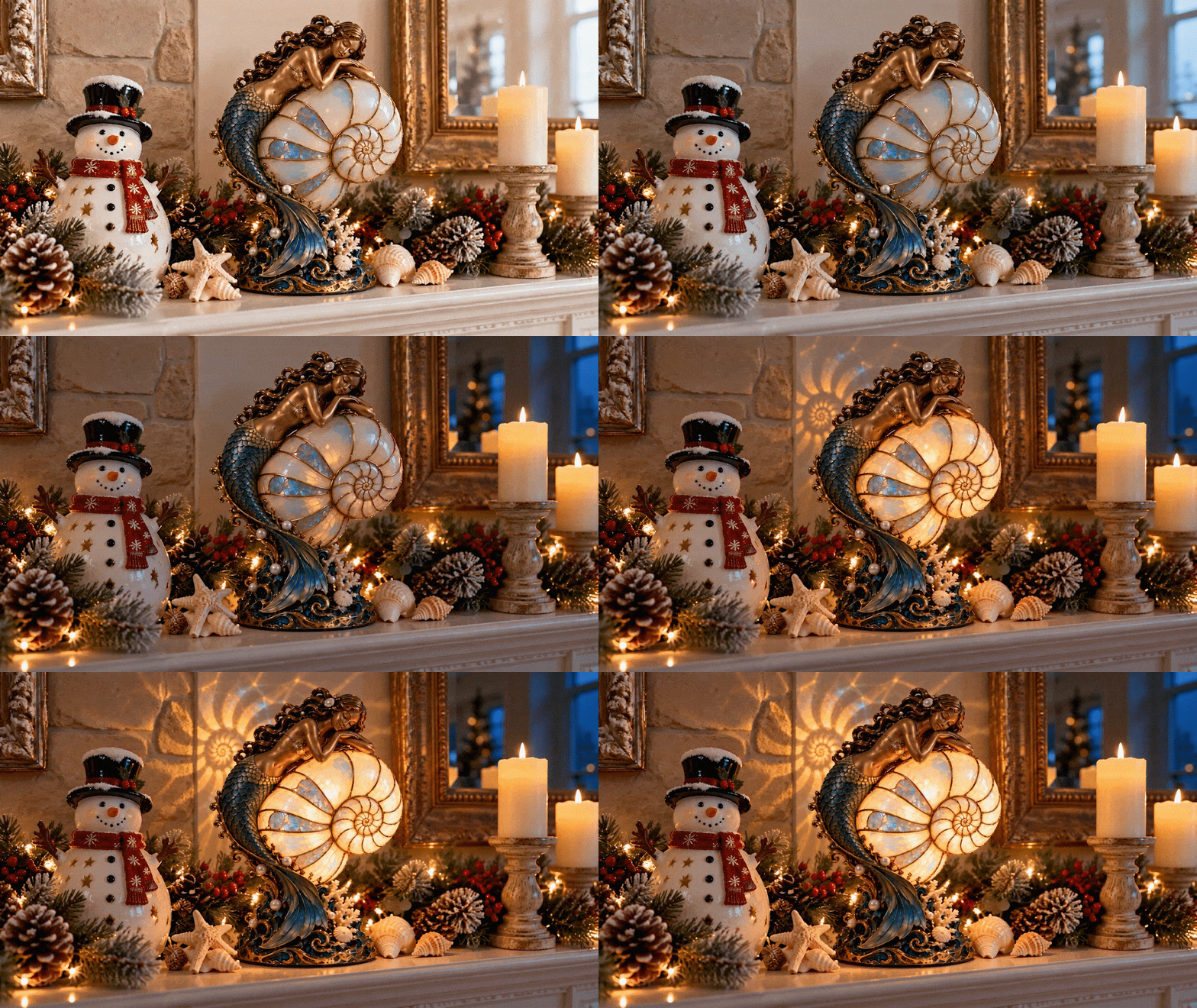
She carried it straight to the mantel and moved the smallest snowman over to make room. Then she went down the hall and came back with the shell jar. She took out a handful of shells, including her 2009 nautilus, and arranged them around the lamp's base.
For the first time in all our years of Christmas decorating, there was a piece of that beach in the middle of it.
What It Does After Dark
That evening, after dinner, our grandson Owen, who is seven, asked if he could turn it on.
He found the little switch on the cord and clicked it. The shell lit up warm and golden from the inside, and every segment of glass glowed a slightly different shade, like light through shallow water.
Then he noticed the wall.
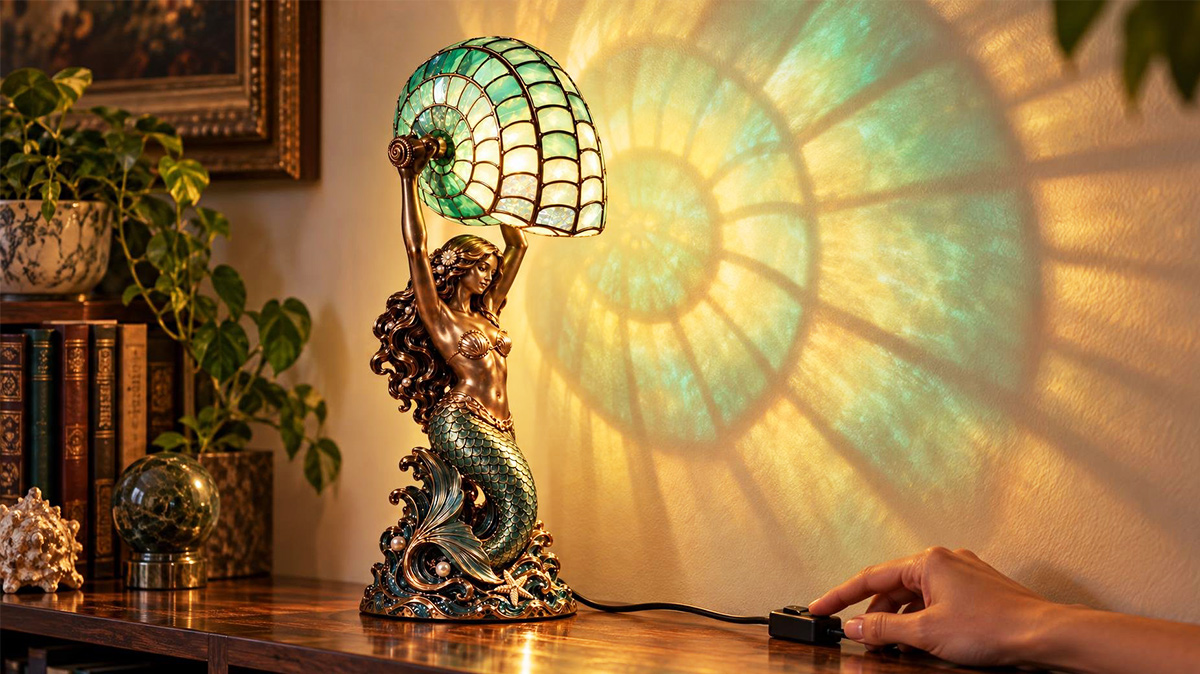
Behind the lamp, the light had spread out across the wall in a soft spiral, the curve of a nautilus shell, drawn in light, over our mantel.
Owen lay on the rug and traced the spiral in the air with his finger. "Grandma," he said, "is that what the inside of a shell looks like?"
Linda said yes, it was exactly what it looked like. She didn't turn on another lamp in the room for the rest of the night.

Ten Months Later
I expected the lamp to go back in its box with the snowmen in January.
It didn't. When the Christmas things came down, the mermaid moved to the bookshelf by Linda's reading chair, and the shells came with it. She turns it on every evening around dusk. She calls it her "low-tide light."
Her sister visited in March and stood in front of it for a long minute before asking where it came from. Linda told her the whole story, all twenty-two summers of it.
Last week, Linda asked me to bring the Christmas boxes down from the attic early. When I asked why, she said she'd already decided where the mermaid goes this year. Back on the mantel, front and center, with the shells.
The snowmen can share.
How It Works
It's a sculpture and a lamp in one piece.
The sculpture. The mermaid and the wave base are cold-cast bronze-finish polyresin with painted details: pearls in her hair, scales on her tail, waves and starfish around the base. In daylight, switched off, it reads as a coastal statue.
The shade. The nautilus shell is segmented stained glass with a pearlescent finish. When the lamp is on, each segment glows on its own, so the shell looks lit from deep inside.
The light. A warm LED bulb is included. The lamp plugs into a standard wall outlet, and an in-line switch on the cord turns it on and off. No batteries, no remote, nothing to set up.
The spiral. The light also spills back onto the nearest wall in a soft spiral, like the curve of a nautilus. Set it close to a plain, light-colored wall and the effect is at its best.
Setting it up takes about a minute. Place it on a mantel, shelf, nightstand or table near a wall. Plug it in. Click the switch.
Two Styles
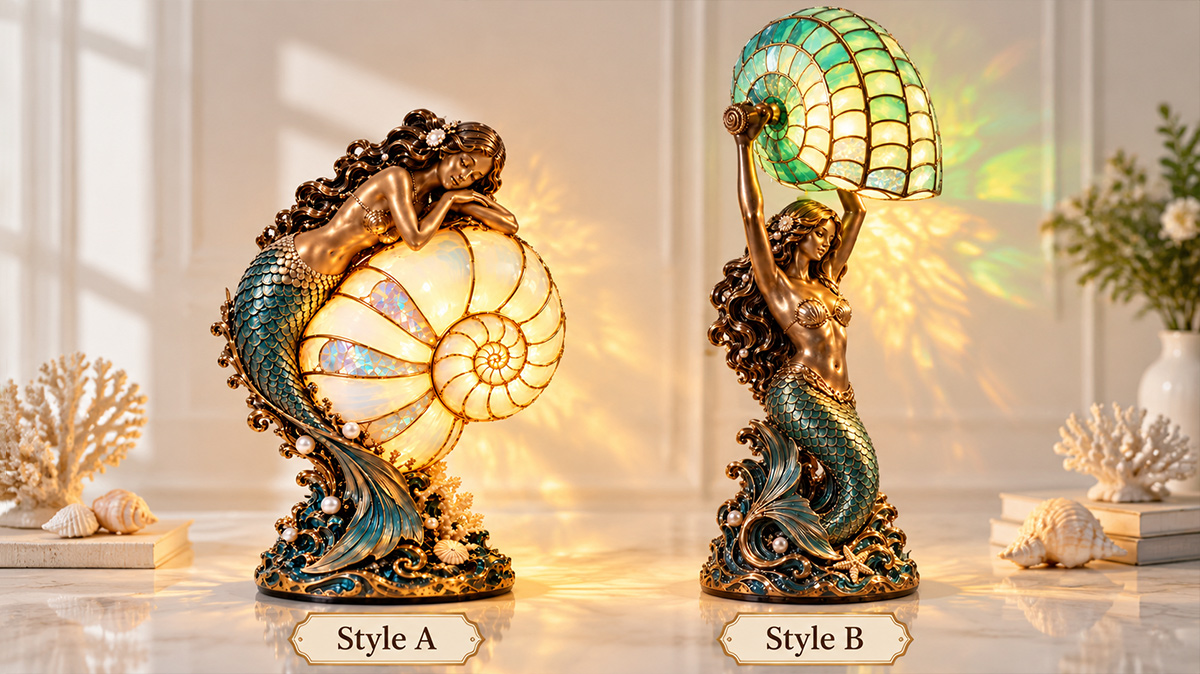
Style A, the Reclining Mermaid. This is the one I gave Linda and the most popular of the two. The mermaid lies along the top of a warm amber-toned nautilus shell, with her tail curling down toward the wave base. It's the softer, more restful look, lovely on a mantel or beside a bed.
Style B, the Standing Mermaid. Here the mermaid stands on the wave base and lifts a sea-green nautilus shade above her head with both arms. It's taller and more dramatic, a strong choice for a bookshelf or a console table.
Why This Instead of Other Beach Decor
Most coastal decor does one job, and only by day. A sign or a printed pillow tells people you love the beach. A shell bowl holds a few souvenirs. A regular table lamp lights the room and disappears into the furniture.
This piece does three jobs. By day it's a detailed sculpture that holds its own on a mantel or a shelf. At night it's a warm accent light, glowing through stained glass. And it puts that spiral on your wall, which no sign or pillow can do.
It also solves the problem Linda had without saying it. A holiday mantel full of red and green doesn't have to choose between Christmas and the things you love. The mermaid sits beside the snowmen and makes the whole display feel like your house, not a catalog's. When the holidays are over, it doesn't go back in a box. It moves to a shelf and keeps working all year.
Who It's For
It's for the person with a shell jar, a beach they go back to, or a coastal town they still call "home." It's for anyone who grew up near the water and now lives far from it, like Linda and me in Ohio. It suits mermaid collectors, coastal and cottage-style homes, beach houses and anyone who wants their holiday decorating to say something about them.
And it's one of the easiest gifts I've ever given: for a wife, a mother, a grandmother, a sister, or a friend who has been saying "I miss the ocean" for years.
Your Questions
Is it a Christmas decoration or a year-round lamp? Both. It fits in among holiday decorations on a mantel or table, and it works just as well on a shelf or nightstand the rest of the year.
How bright is it? It's an accent lamp, with a soft, warm glow and no glare. It sets a mood and lights a corner. For reading a full page or lighting a big room, keep your regular lamps too.
Does it need batteries? No. It plugs into a standard outlet, and the warm LED bulb is included. The switch is on the cord, so it's easy to reach.
How big is it? Check the product page for the exact dimensions before you choose a spot. It's sized for a mantel, shelf or nightstand.
What Customers Are Saying
Patricia D. ⭐⭐⭐⭐⭐
"We vacationed in Cape May every summer when the kids were little. This sits on my mantel now, with our shells around the base. The glow on the wall at night is beautiful."
Gary S. ⭐⭐⭐⭐⭐
"Bought Style A for my wife, who collects anything with a mermaid on it. The detail in the hair and the tail is better than I expected. She has it beside the bed."
Michelle R. ⭐⭐⭐⭐⭐
"I chose the standing mermaid for my bookshelf. In the daytime it's a statue, and at night the green shell glows like sea glass. My favorite thing in the room."
Before the Boxes Come Down from the Attic
If you're thinking about it as a Christmas gift, or for your own mantel this year, Thanksgiving is about four weeks away, and the decorating weekend comes right after it. Order now and it'll be home before the boxes come down from the attic.
The Graddi™ Sanibel Glow Mermaid Lamp is $39.99 right now (50% OFF, regularly $79.98), with a 30-day money-back guarantee.
Holiday decorating doesn't have to repeat the same red, green and snowflakes every year. Put one beach memory you love in a corner you walk past every evening, and your holiday decorating starts to look like your own home.